
This unit is about Functions, so we are going to learn its definition and how important it is, to be able to convey a message clearly. Function is the reason why we communicate. When we speak or write, we do for a reason. Functions are a way of describing how we use the language. Normally, we focus on the use of language and its meaning for the people who are in the context where it is used. Jakobson (1987) in his book titled “Language in Literature” stated that there are six elements, or factors of communication, that are necessary for communication to occur: context, addresser, addressee (receiver), contact, common code and message. Each factor is the centerpiece of relations between the message and the factor. There are different functions that express different things, for example, the emotive function, referential function, multilingual function, conative function, poetic function, and phatic function. (Jakobson, 1987)
In oral language some common functions may include:
•Giving instructions
•Making requests
•Defending an argument
In academic writing we use a range of specific functions in order to communicate ideas clearly. These include:
•Describing processes
•Comparing or contrasting things or ideas
•Classifying objects or ideas
The language we use to express a function is called an exponent. An exponent can express different functions at the same time but it depends on the context it is used in. An exponent expresses different levels of formality, these ones are formal (language is used in more official and important situations) and informal (language occurs in relaxed situations, among friends, etc) Informal exponents are sometimes colloquial. Normally, people usually choose to use the level of formality that suits a situation.
To conclude, functions are very important at the time of communicating different things, so it is necessary to know how to teach appropriately in the classroom and here are some activities that can help teachers.
How to apply knowledge related to Functions in the English classroom :
Communicative games:
Oral games, games of guessing, puzzle-solving, etc. have been developed to encourage communication among learners. Communicative games are useful for teaching language functions and also for encouraging students to understand.

Oral speech:
Exchanging interactions and stories between students create the need for language use or for the use of language functions.

Developing other language skills:
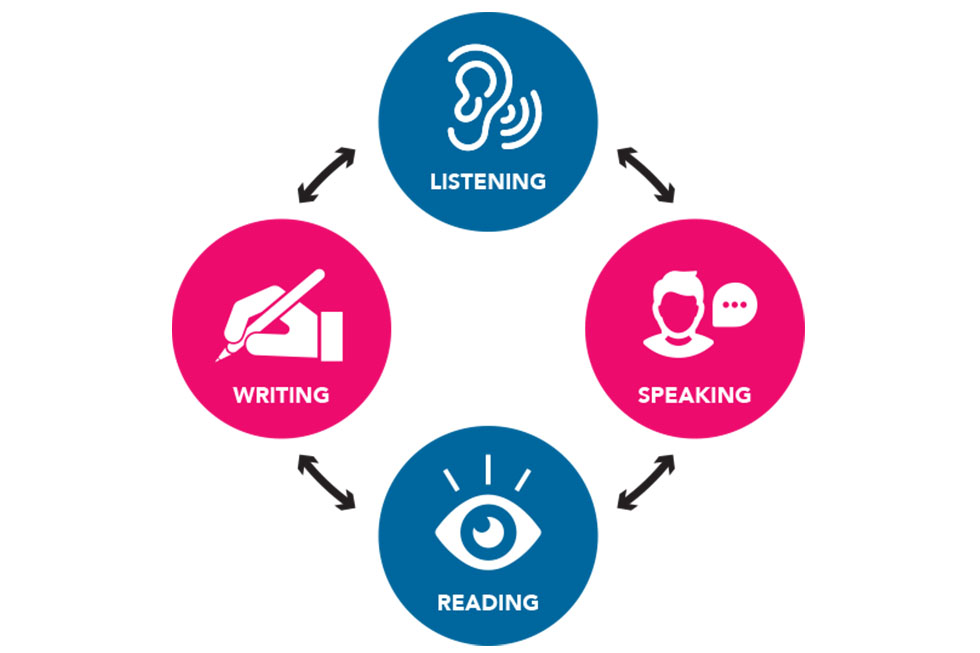
The language consists of four capabilities: to read, to write, to listen, to speak. These competencies can also be established through language functions. Language function is a vital part of language learning and we will also acquire other skills when teaching them. The key objective of teaching, however, is to ensure that students speak according to contexts and that students also gain more skills, either directly or indirectly.
References.
ELPA21. (n.d.). Retrieved from ELPA21: http://prodev.elpa21.org/module2/module2/resources/LanguageFunctionsForms.pdf
Jakobson, R. (2019, 7 3). Elcombuls. Retrieved from Elcomblus: https://www.elcomblus.com/functions-of-language-by-roman-jakobson/
Spratt, M., Pulverness, A., Williams, M., & University of Cambridge. (2011). The TKT course: Modules 1,2 and 3. Cambridge: Cambridge University Press.


No hay comentarios:
Publicar un comentario